
One Petition. Five Clients. Total Flexibility.
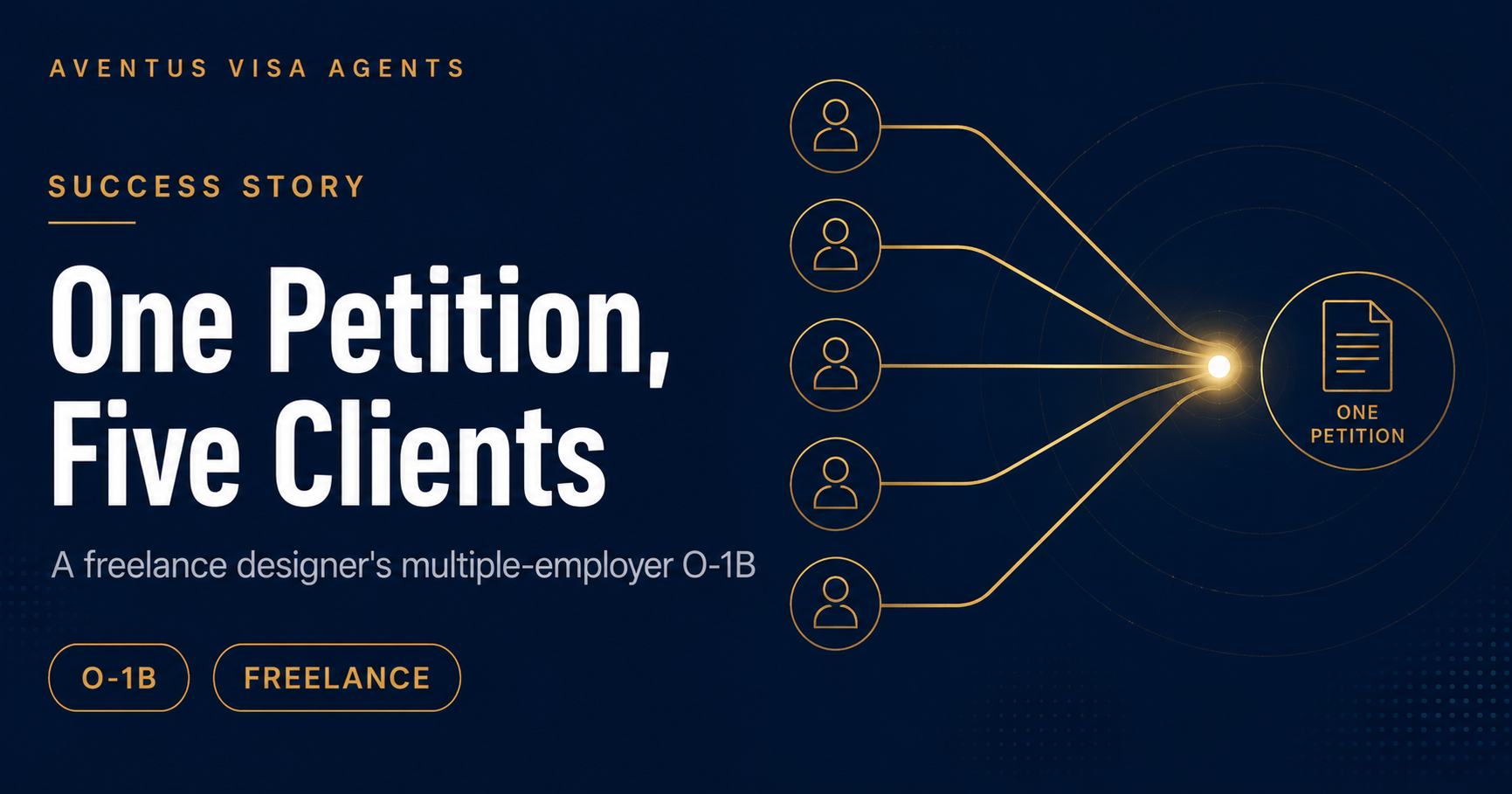
A freelance designer's O-1B, structured the right way.
One Petition, Five Clients: How a Freelance Designer Stopped Turning Down U.S. Work
This story is a composite drawn from typical Aventus engagements. Names and identifying details have been changed.
"Mariana" had the kind of career that looks great everywhere except on a visa form. A São Paulo-based product designer with international design awards, published features in major industry outlets, and jury seats at two global design competitions, she had U.S. clients asking for her by name. What she didn't have was a single U.S. employer willing to sponsor a traditional petition — because no single client employed her.
That's not an edge case. It is the defining shape of modern creative careers, and it's exactly the gap the multiple-employer agent model exists to close.
The problem with "just get sponsored"
Every few months, a U.S. startup or agency would offer Mariana a contract — three months here, six months there. None could justify acting as her petitioner for work that represented a fraction of her income. Advised informally that she "needed an employer," she kept declining U.S. engagements and watching competitors take them.
The agent-based solution
Working alongside her immigration attorney, Aventus acted as her U.S. agent-petitioner and structured a single O-1B petition covering her slate of engagements: five client contracts and a defined itinerary of project work, each documented with deal memos and terms. Her extraordinary-ability evidence — awards, press, judging, distinguished-client roster, and above-market day rates — did the qualifying. The agent structure did the enabling.
The result
One petition. Five clients at filing — with the structure to add compliant engagements over time. No employer lock-in, no forcing a freelance career into a full-time job it didn't want to be. Eighteen months in, Mariana's U.S. billings had more than doubled, and two of her original clients had grown into anchor accounts.
The lesson: if you're freelancing at the top of your field, the question isn't whether you qualify for an O-1. It's whether your petition is structured for the way you actually work.
Composite illustration; results vary by case. Not legal advice.
Work with multiple U.S. clients under one petition? Explore Multiple Employer Agent services.